Ultra-Micro Balance Features
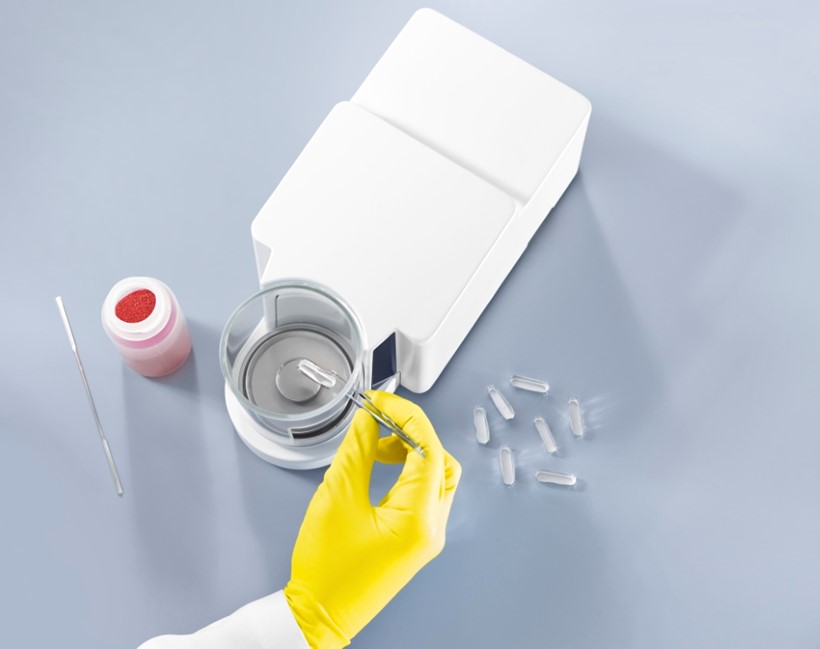
Sartorius ultra-micro lab balances meet the highest standards for accuracy and precision. Our intelligent built-in technologies like automated motorized leveling illuminated weighing chambers, and touch-free control of the draft shields set us apart from the competition. Ultra-micro balances has maximum weighing capacity 2.1 g, scale interval (readability) 0.1 μg. Draft shield type M: Automatic, motorized, round, glass draft shield with learning capability, illumination, and integrated motion sensor. Draft shield type F: Manual stainless-steel draft shield for filter weighing applications. Onboard QApp center for software guided workflows (with MCA display). Status Center indicates all relevant information about the balance (available on the MCA display).

Ultra-Micro Balance Benefits
Sartorius' titanium weighing pans negate magnetic interferences which result in better repeatability and accuracy. The illuminated weighing chamber increases visibility and enhances secure sample dosing. Sample holders (e.g. for safe-lock tubes, filter applications) further support ergonomic sample weighing and simplify weighing workflows (available as accessory). The built-in motion sensor allows the touch-free opening and closing of the draft shield. Balances has automated motorized leveling. Simplified solutions for sample holders and intuitive workflows with built-in QApp applications guarantee a higher degree of repeatability of different workflows while reducing the possibility of human error during measurement steps.
FAQ
Ultra-micro balances are used to weigh the smallest sample amounts with a readability of 0.1 µg. These balances are very often used in filter-weighing applications such as environmental testing. By measuring the initial and back weight of filters, the smallest quantities of retained particles are determined. Another application is the weighing of stents, to determine the amount of a very thin coating of chemicals on the stents.
Step 1: Choose a stable weighing table in a quiet place to set up the balance.
Step 2: Maintain consistent climate conditions in your laboratory.
Step 3: Make sure the balance is leveled and calibrated.
Step 4: During a series of measurements, ensure..
Download instructions and recommendations for achieving reliable weighing results.
Today's high-performance laboratory balances support users in every way, with impressive practical and regulatory functions. Despite this, high-performance laboratory balances are complex and highly sensitive measuring devices. Therefore, depending on the device, many different influences, such as installation location and user expertise, can affect the displayed results.
Despite the positive advantages of magnetism, this phenomenon is quite undesirable when weighing. Weighing magnetic materials or magnetizable samples can destabilize the weighing result or compromise reproducibility.
High-density materials such as marble, synthetic stone, etc. will absorb low frequency vibrations which could have a detrimental effect on the balance's performance. Also, because they are heavy, they tend to be solid support for the balances. Weighing tables specially made for balances are especially recommended, especially for high-resolution balances. A stone weighing table is the best option because it can dampen vibrations.
