New EP 2.6.7 Regulation: What Changes in Mycoplasma Detection and How to Stay Compliant?
The European Pharmacopoeia has just published one of the most significant revisions to Chapter 2.6.7 in the past twenty years. For all laboratories in the pharmaceutical and biotechnology industry conducting mycoplasma testing, this is a change you cannot afford to miss — particularly as the new regulation comes into effect on 1 April 2026. In this guide, we explain what the new EP 2.6.7 (12.2.) brings, what the concrete technical requirements are, when you need to act and how Sartorius Croatia can support your transition.
Why Is Mycoplasma Detection So Important?
Mycoplasmas are among the most dangerous and difficult-to-detect contaminants in bioprocess manufacturing. Unlike bacteria and fungi, they are not detected by standard sterility tests — they do not grow on conventional culture media and do not cause visible turbidity.
The consequences of mycoplasma contamination are serious:
• direct impact on the quality of biopharmaceutical products
• risk to patient safety
• costs associated with batch recalls and revalidation.
This is precisely why EP 2.6.7 exists — as a harmonised regulatory framework ensuring consistency and confidence in mycoplasma testing across the industry.
What Does the New EP 2.6.7 (12.2.) Bring?

NAT Methods Gain Equal Status to Culture-Based Testing
The most significant shift in the revised EP 2.6.7 is the formal recognition of nucleic acid amplification techniques (NAT) — including PCR methods — as equivalent to traditional indicator cell culture.
Until now, rapid microbiological tests based on PCR were permitted as an alternative, but without clearly defined criteria for demonstrating equivalence. The new regulation changes this:
• NAT methods now have their own dedicated regulatory framework within the chapter
• explicit performance criteria for comparability studies have been defined
• the advantages are highlighted: shorter analysis time and the ability to detect both culturable and non-culturable mycoplasmas.
This development is aligned with parallel progress in the US — USP is currently developing a draft of USP <77>: Mycoplasma Nucleic Acid Amplification Tests.
New limit of detection: CFU and GC units
The central technical requirement of the revision concerns the limit of detection (LOD). A PCR method intended to replace culture testing must demonstrate:
≤ 10 CFU/mL or < 100 genomic copies (GC)/mL.
Why is the GC unit being introduced?
A single microorganism can contain multiple genome copies. The classical CFU measure (colony-forming units) describes the number of viable, culturable organisms — but PCR detects nucleic acids regardless of culturability. The introduction of the GC unit provides a standardised reference framework enabling meaningful comparison between NAT and culture-based methods.
In addition, the new regulation stipulates:
The GC:CFU ratio must remain below 10 for reference preparations.
This is a key parameter your team must consider when selecting and validating reference standards.
Expanded Panel of Reference Species
The validation panel must now reflect mycoplasma species realistically associated with the biological origin of raw materials and your production system.
Stronger Emphasis on Process Control
The revision introduces clearer requirements for monitoring the entire analytical workflow:
1. External control samples should be added prior to nucleic acid extraction (wherever possible) — to monitor extraction efficiency, amplification performance, and potential inhibition.
2. Both the cellular fraction and the supernatant should be tested — mycoplasmas can attach to cells, which means testing the supernatant alone may miss contamination.
3. Formal specificity assessment of the method against phylogenetically related, non-mycoplasma bacteria is required.
All validations conducted in accordance with EP 2.6.7 (01/2008) remain valid — provided they were approved before 1 April 2026.
For all new validations and revalidations, the requirements of the new EP 2.6.7 (12.2.) apply. Our team provides comprehensive support through validation services for the biopharmaceutical industry.
Using Microsart® Standards?
The Microsart® AMP Mycoplasma Detection Test was fully compliant with EP 2.6.7 (01/2008). However, cross-validation using the newly introduced digital PCR (dPCR) quantification method indicates higher GC values — meaning that Microsart® 10 CFU standards no longer meet the requirements of the revised EP 2.6.7 (12.2.).
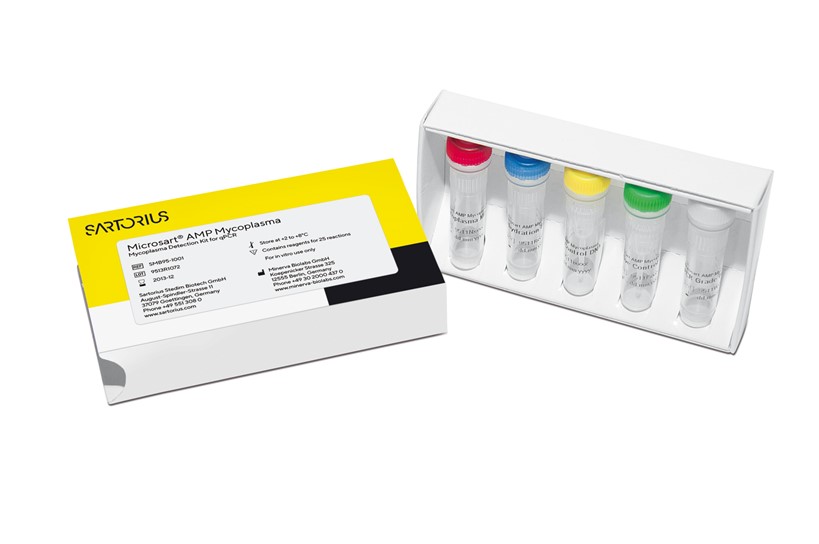
Microsart® kits remain available for laboratories continuing to operate under the previous standards. However, for all future validations under the new regulation, we recommend transitioning to the Cyclus® generation.
Cyclus® — A Portfolio Designed for the New EP 2.6.7
Sartorius developed Cyclus® as a direct response to the updated regulatory requirements. Each component of the portfolio specifically addresses one or more of the new demands.
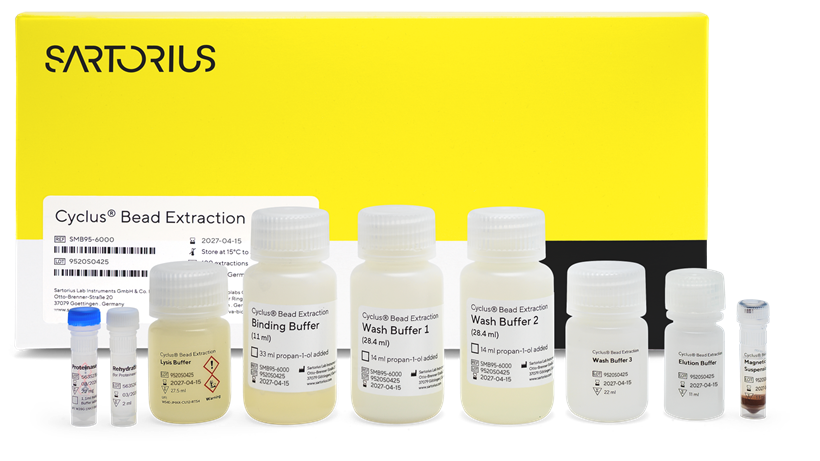
Cyclus® Bead Extraction
Nucleic acid isolation using magnetic beads instead of conventional silica spin columns. Compatible with both manual and automated protocols (KingFisher™ Flex), designed for high-throughput applications without compromising precision.
Further information about the new Cyclus® product portfolio will be published soon.
Checklist: 5 Steps Towards Compliance with the New EP 2.6.7
1. Review your validation dates — were they completed before or after 1 April 2026?
2. Assess your reference panel — does it include all species relevant to your system, including M. salivarium?
3. Verify the GC:CFU ratio of your reference standards — it must be below 10.
4. Introduce external controls prior to extraction into routine protocols.
5. Plan the transition to Cyclus® standards for all validations under the new requirements.
The revision of EP 2.6.7 formally confirms what the industry already knows: molecular methods are the future of mycoplasma testing. For laboratories in the pharmaceutical and biotechnology industry, this is not merely a matter of regulatory compliance — it is an opportunity to modernise workflows and strengthen confidence in QC processes.
Have questions about the transition? Contact us via the contact form or write to us at sartorius@sartorius.hr.